
Write an incident report the supervisor can act on
Record what happened, what the officer did and what remains open. Ranger keeps the report with the shift and patrol context.
“Suspicious person at entrance. Supervisor informed.” It is a short entry, but the supervisor still needs answers. Which entrance? What did the officer actually see? When did it happen? What action was taken? Is anyone still waiting for a response?
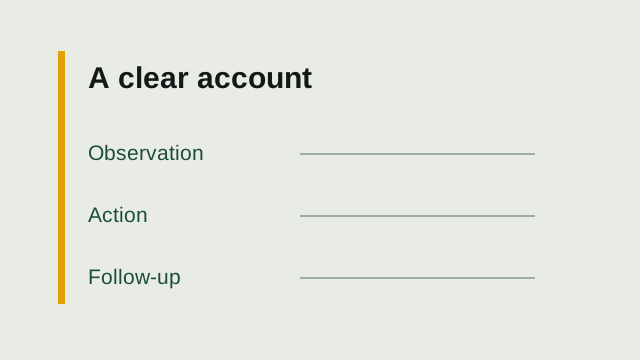
A useful incident report gives the next reader enough detail to understand the event and decide what needs attention. It does not need elaborate language. It needs a clear account.
Write the observation before the conclusion
Describe what you saw or heard. Separate that from what someone told you and from what you believe may have happened.
For example, “a person tried the locked side entrance twice” records an observation. “A person was trying to break in” adds an intention that the officer may not know. If a visitor gives an explanation, record it as their statement rather than treating it as an established fact.
This distinction helps a supervisor review the report without having to untangle evidence from assumptions. Use ordinary words, identify the location clearly and avoid abbreviations that another shift may not understand.
Keep the sequence clear
Record when the event was observed, what action was taken and when the relevant person was informed. If a time is estimated, say so. If the report is entered later, avoid writing as though it was recorded at the moment of the event.
The sequence matters because a supervisor may need to understand how the response developed. A report that says someone was informed should also explain who was contacted, what was communicated and any instruction received.
Write down the outcome available at the time. “Area checked; no person located” is different from “matter resolved.” If further checks are required, make that remaining work clear.
Where Ranger helps
Ranger keeps incident reports connected to attendance, patrol checkpoints and occurrence entries. The report can be reviewed as part of the shift record, with the officer’s other activity alongside it.
That is useful when a report begins with something noticed during a patrol, or when an occurrence entry needs a fuller incident account. It reduces the need to reconstruct the event from separate records before the supervisor can review it.
The quality of the report still depends on the officer’s entries. A linked record gives context; it does not establish a person’s intent, verify every statement or replace a supervisor’s judgment.
Check the report before moving on
Read it as if you were the next person on duty. Could you identify the place and understand the event without calling the author?
- State the location, date and relevant times.
- Describe the observation and identify information supplied by others.
- Record the officer’s actions and the people informed.
- Note the outcome, remaining work and any instruction for follow-up.
The agency’s instructions should determine the response and escalation. When immediate action is needed, follow those instructions first; finishing an app entry must not delay the response. An internal report also does not replace reporting to the appropriate authority where required.
Keep personal information relevant to the incident and handle it through the agency’s approved process. Adding unnecessary details makes a report harder to read and creates more information to protect.